

What essential service could you never do without? While water and electricity immediately come to mind, it’s alarming that in 2023, the FBI documented roughly double the number of ransomware incidents targeting utilities compared to the year before. This surge is particularly concerning given the swift increase in our dependence on digital technologies for advanced grid management and reliability.
The critical sectors that support these services are struggling with a shortage of skilled workers and inadequate cybersecurity training, particularly in smaller utilities. In response, the U.S. government is working to enhance and diversify the cybersecurity workforce within critical infrastructure. The U.S. Department of Energy’s National Renewable Energy Laboratory (NREL) is actively involved in this initiative.
Cybersecurity as a Core Principle
Just as safety is a fundamental aspect of physically demanding jobs like welding or cutting, the question arises: Can cybersecurity become an intrinsic part of professional culture? Gareth Williams, a leading cybersecurity researcher at NREL, is exploring this concept.
Williams spearheads NREL’s Cyber-Informed Engineering initiative, an approach promoted by the DOE to integrate cybersecurity into engineering practices. Instead of treating cybersecurity as an isolated topic covered in courses or annual refresher training, this approach aims to embed it into the daily responsibilities of engineers.
Williams notes, “Cybersecurity is often viewed through a technical lens, but critical systems are designed and managed by people throughout their lifecycle. Cyber-informed engineering involves everyone—engineers, operators, executives, vendors, and suppliers—in the cybersecurity strategy.”
To support this vision, researchers at NREL are curating a repository of security resources for critical systems and are working on developing educational programs with engineering schools and targeted training for industry leaders. The goal is to make security an integral part of system design, so that vulnerabilities are proactively addressed from the beginning.
Zoe Dormuth, a cyber engineer at NREL, emphasizes the importance of integrating cybersecurity into the fabric of system design. “We need to anticipate more sophisticated attacks in the future and ensure that systems are secure from the ground up,” she says. “Training and equipping the workforce with cybersecurity knowledge is crucial, as many people are still unaware of the importance of energy system security.”
To foster a culture of cyber-informed engineering, NREL is creating tools to help the current workforce understand security intuitively.
Building a Career in Energy Security
For some like Dormuth, a career in cybersecurity comes naturally. With parents in the field and a DOE-sponsored internship that shaped her early career, cybersecurity was a clear path. However, others may need additional incentives to discover their interest and potential in this field.
“The coursework can be demanding, so it’s vital to highlight the rewards and opportunities early on,” Dormuth advises. “We also want to demonstrate that cybersecurity is versatile; individuals with skills in quantitative fields might find it a good fit, even if they haven’t considered it before.”
Javier Moscoso, an electrical engineering student from Puerto Rico, found his calling through an NREL internship that connected cybersecurity with his goal of improving electricity reliability at home. “Experiencing how cybersecurity supports power systems has been eye-opening,” Moscoso reflects. “In Puerto Rico, frequent power outages are common, and learning to incorporate cybersecurity into grid design will help create a more resilient infrastructure.”
Moscoso’s internship was part of the ENRGE consortium, which aims to create career pathways for diverse students. Four ENRGE-sponsored interns joined NREL in 2024.
Senior researcher Shane McFly notes that a key trait for success in cybersecurity is a strong desire to tackle challenges. “Cybersecurity, like many fields, requires a willingness to face and overcome obstacles,” he explains. “It’s not just about having a job but being motivated to address complex problems.”
McFly is also instrumental in cyber education and training at NREL, both within the lab and at industry events. His lectures and tools are designed to make cybersecurity more engaging and accessible, demonstrating how it can be a fulfilling career choice.
Innovative Cybersecurity Training
Traditional cybersecurity training, which often involves sifting through system logs, can be tedious. To combat this, industries have embraced interactive, team-based activities that mirror real-world collaboration. One such event is DOE’s Liberty Eclipse Full-Scale Exercise, where participants engage in live training and incident response simulations.
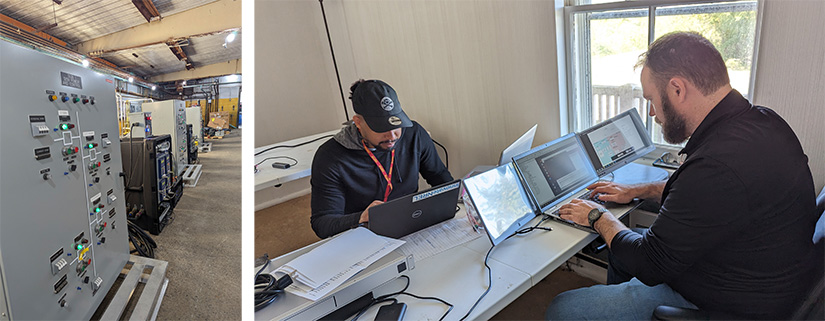
When the 2023 Liberty Eclipse faced the challenge of remote participation due to the pandemic, McFly’s team developed a new interface and networking solution to facilitate secure, remote involvement, allowing more utilities to participate.
At another event, McFly introduced a 3D network traffic visualization tool that transformed how participants interact with and understand data. This tool proved effective, allowing users to navigate and interpret network data more intuitively, bridging the gap between technical and non-technical users.
“This visualization was a huge success,” McFly notes. “It enables users at all levels to grasp network dynamics and engage with cybersecurity more confidently.”
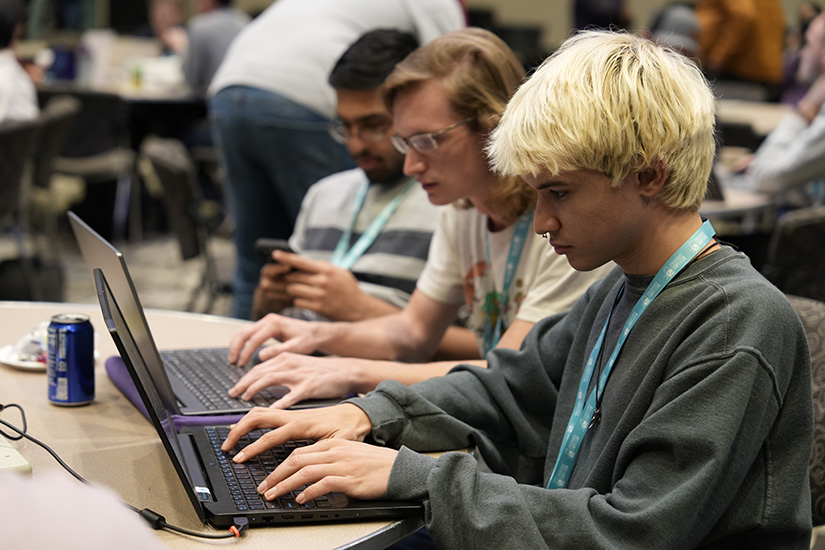
The same tool supports the ARIES Cyber Range, where researchers and partners experiment with complex cyber-physical systems. This range offers a practical way to engage with emulated networks and power systems, helping students and industry professionals gain a deep understanding of critical systems.
Despite advancements in cybersecurity solutions, NREL researchers recognize that current threats require a broader cultural shift. As McFly asserts, “Cybersecurity is not just an IT issue; it’s a human issue. We all have a role in fostering a culture of cybersecurity.”
If you’re interested in a career or internship in energy security and resilience at NREL, check out our current job openings.
For more information on Cyber-Informed Engineering and its applications, contact cie@nrel.gov.


